From documents to knowledge graphs
Search gives you documents. A knowledge graph gives you the connections between them — and that difference is why answers, not links, become possible.
 Sonu Nigam· FounderJun 28, 20261 min read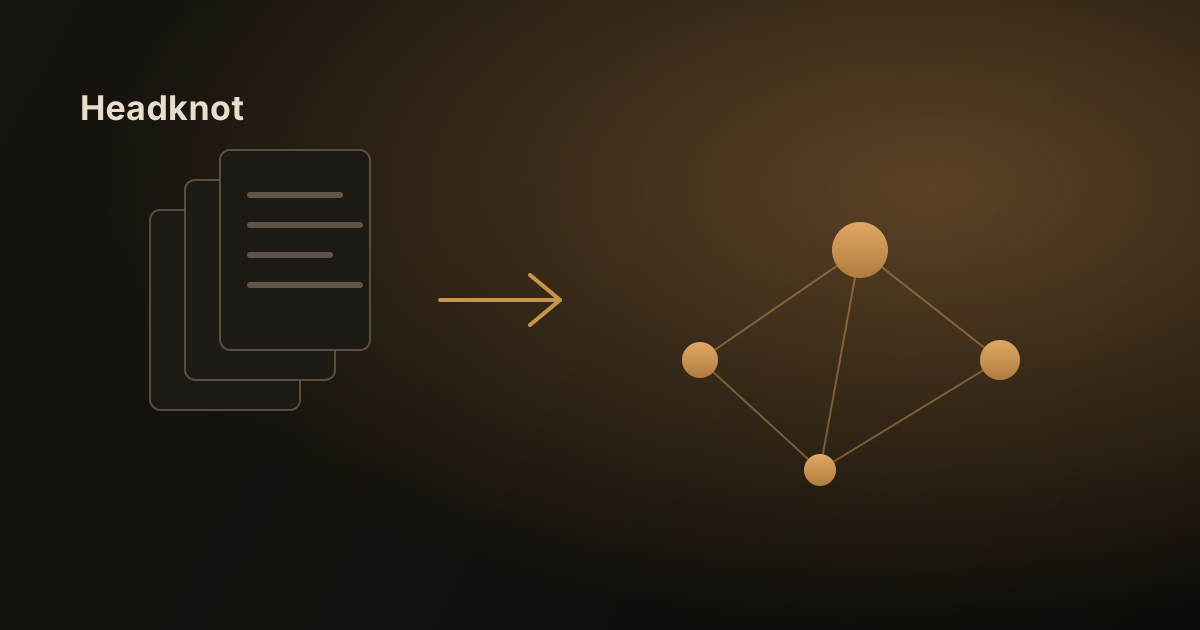
Most tools that promise to "organize your knowledge" are really just search engines with a nicer coat of paint. You type words, they return documents that contain those words. The work of turning ten documents into one answer is still yours.
A knowledge graph changes the unit of knowledge from the document to the relationship.
Entities and claims
When Headknot ingests a piece of content, it doesn't just index the text. It extracts:
- Entities — the people, projects, tools and concepts mentioned.
- Claims — statements about those entities ("Acme uses Postgres 16").
- Relationships — how entities connect ("Project X depends on Service Y").
These become nodes and edges in a graph that spans every source you've connected.
Why this matters
Consider a question like:
"Which services would be affected if we upgrade the auth library?"
Search can't answer that — no single document contains it. A graph can, by traversing the dependency relationships between services and the library.
| Approach | Unit | Answers "what's connected?" |
|---|---|---|
| Search | Document | No |
| Graph | Relationship | Yes |
Keeping it honest
A graph is only useful if it's trustworthy. Every edge in Headknot traces back to the observation that created it, so answers come with provenance — you can always see why the system believes what it says.
That traceability is what lets a graph be more than a clever demo. It's what makes it something you can actually run your team on.